Biodiversity conservation, wildlife protection, and natural capital resilience — ESG BROADCAST shares key takeaways.
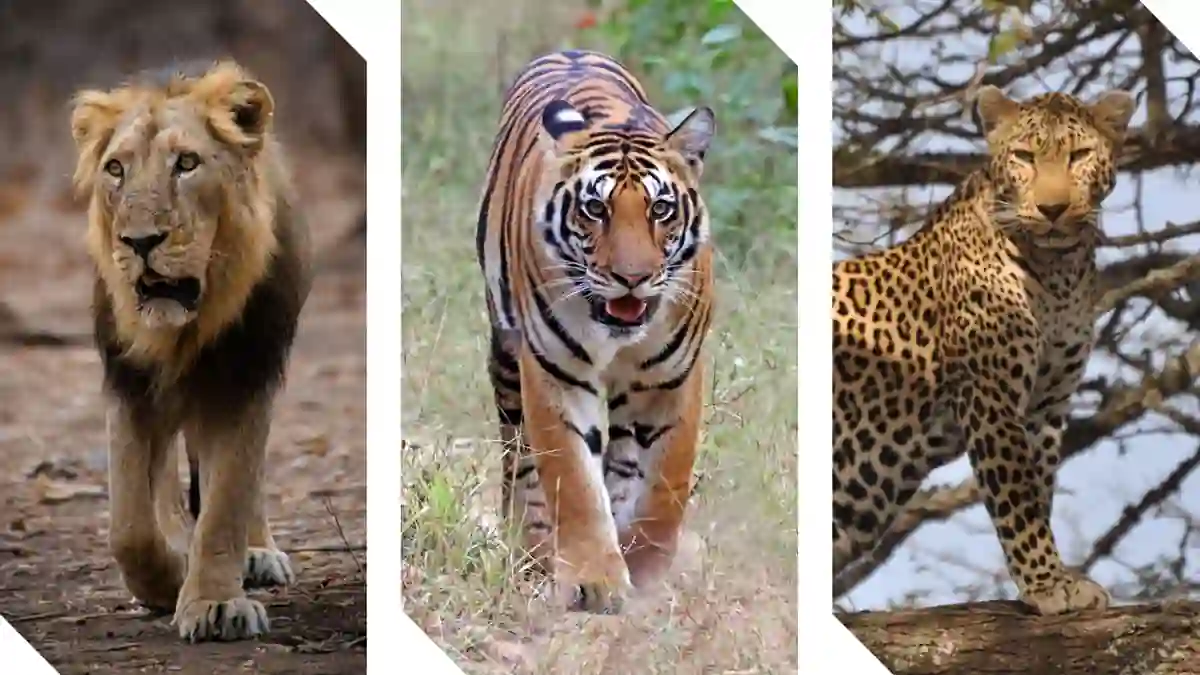
India’s western state of Gujarat has emerged as a rare ecological convergence zone, now officially hosting tigers, Asiatic lions, and leopards within its landscape. The latest development, reported in November 2025, confirms the presence of tigers in Gujarat alongside its globally significant lion population. This milestone reflects the cumulative impact of long-term wildlife conservation, habitat protection, and governance-led biodiversity planning undertaken over the last two decades.
Historically, Gujarat built its wildlife conservation identity around the Asiatic lion population in Gir Forest. Structured habitat management, community-linked conservation, and strict anti-poaching enforcement allowed lion numbers to steadily rise and expand beyond Gir into coastal and agro-forest regions. Over time, these protected corridors also became viable habitats for leopards, enabling stable coexistence between large carnivores and human settlements.
The recent confirmation of tiger presence marks a significant ecological indicator rather than an isolated event. Tigers typically require expansive, undisturbed habitats and strong prey bases. Their arrival signals improving forest connectivity, prey density, and ecosystem health across Gujarat’s protected and buffer landscapes. State forest authorities have strengthened monitoring through camera traps, GIS-based corridor mapping, and inter-state coordination with neighbouring tiger reserves.
Beyond this headline development, Gujarat has rolled out several complementary wildlife and ESG-aligned initiatives in recent years. The state expanded coastal and inland wetland protection under integrated biodiversity management programs, supporting migratory bird populations and mangrove restoration. Gujarat also advanced community-based conservation models, compensating farmers for wildlife-related crop losses while incentivising coexistence practices. These measures align biodiversity outcomes with social equity, a core ESG principle.
On the policy front, the Government of Gujarat has increased budgetary allocations for forest protection, habitat restoration, and wildlife health surveillance. Renewable energy planning in forest-adjacent regions now integrates wildlife movement studies to reduce ecological fragmentation. Gujarat’s ESG governance framework increasingly recognises biodiversity as natural capital, embedding ecological risk assessment into infrastructure and industrial planning approvals.
Strategic significance lies in Gujarat’s ability to demonstrate that biodiversity conservation can coexist with economic growth and industrial development. For ESG-focused investors, corporates, and policymakers, this model strengthens India’s natural capital disclosures, reduces long-term ecological risk, and reinforces compliance with emerging biodiversity-linked ESG standards. Gujarat’s wildlife outcomes position the state as a reference point for nature-positive development pathways in high-growth economies.