
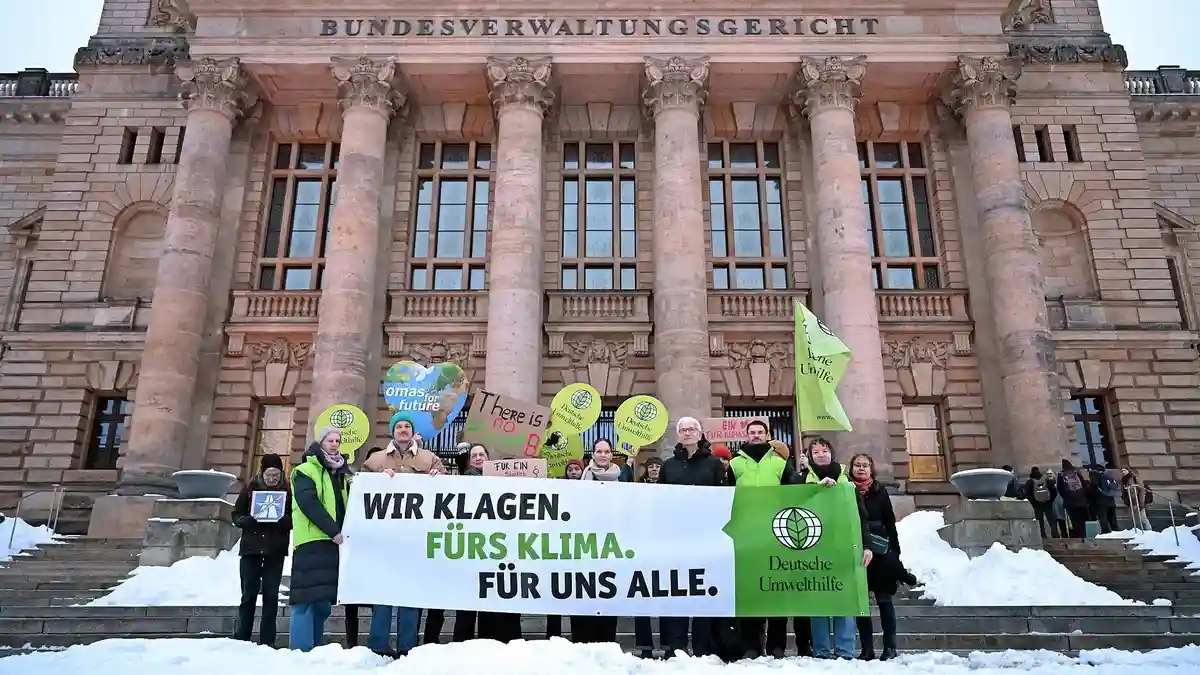
Legal Mandates for Climate Action and Emission Reduction Targets: ESG BROADCAST shares key takeaways.
The German Federal Administrative Court (BVerwG) in Leipzig has issued ruling regarding the adequacy of the Federal Government’s Climate Protection Program 2030. In the case docketed as BVerwG 7 C 6.24, the court addressed a legal challenge brought by Environmental Action Germany (Deutsche Umwelthilfe – DUH) and other climate activists. The core of the dispute centered on whether the executive branch had met its statutory obligations under the Federal Climate Protection Act (KSG) to implement measures sufficient to meet binding sectoral emission targets, particularly in the transport and building sectors.
The court’s decision clarifies the executive branch’s discretionary power versus its legal obligations to protect the environmental foundations of life. While the government argued that its Climate Protection Program 2023 had updated and superseded the contested 2030 program, the court scrutinized the procedural and substantive requirements for these climate roadmaps. Under the current legal framework, the implementing bodies must ensure that projected emission reductions are backed by concrete, quantifiable measures rather than vague policy aspirations. This ruling reinforces the judiciary’s role in overseeing the government’s progress toward achieving climate neutrality by 2045.
A significant point of the ruling involves the interpretation of Section 9 of the Climate Protection Act. The court emphasized that the government must present a program that is inherently capable of achieving the necessary cumulative reduction in CO2 equivalents. For the transport sector, which has repeatedly missed its annual targets, the ruling places additional pressure on the Ministry of Transport to refine its strategies. The court confirmed that climate litigation remains a viable tool for civil society to hold the state accountable for its carbon budget management and the protection of future generations’ fundamental rights.
The applicability of this ruling extends to the entire German regulatory landscape, as it mandates a more rigorous and data-driven approach to climate policy-making. The decision implies that future climate protection programs must undergo stricter impact assessments to prove their effectiveness before being finalized. As the European Union tightens its “Fit for 55” requirements, Germany’s domestic legal setbacks highlight the difficulty of bridging the gap between high-level legislative goals and the practical implementation of emission-cutting technologies and infrastructure changes.
Strategic significance lies in the heightened legal risk for the state and the subsequent regulatory pressure on high-emitting industries. For businesses, this ruling suggests that the German government will likely introduce more stringent sector-specific regulations to satisfy judicial oversight. Companies operating in the building and transport sectors must prepare for accelerated transition policies as the government seeks to insulate its climate programs from further legal challenges. Compliance will now require a closer alignment with the state’s carbon reduction trajectory to mitigate the impact of sudden policy shifts driven by court mandates.
Image Credit: picture alliance/dpa | Jennifer Brückner