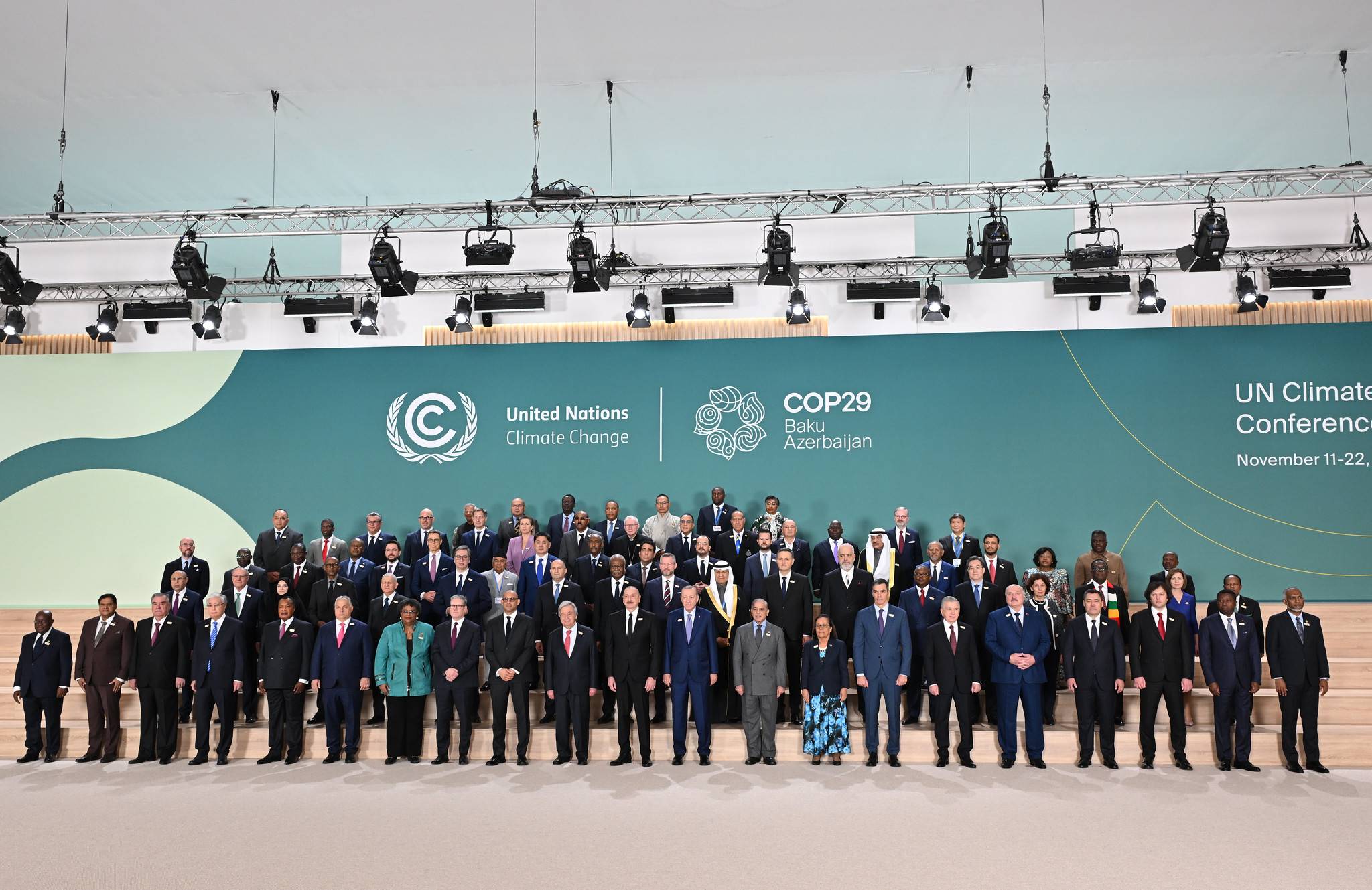
The COP29 conference, held this year in Baku, Azerbaijan, extended beyond its scheduled Friday deadline, concluding over the weekend with a significant new commitment: developed nations pledged to provide $300 billion annually by 2035 to assist developing countries in mitigating the effects of climate change and transitioning to cleaner energy. This represents a threefold increase from the existing annual climate finance goal of $100 billion.
Acknowledging the substantial financial requirements of developing nations, the COP29 outcome also urged global actors to strive for $1.3 trillion in annual climate finance by 2035. This target includes the $300 billion from developed countries and additional funds from sources such as private sector investments. The $1.3 trillion figure aligns more closely with the financial needs of developing nations to adapt to climate impacts and shift to low-carbon development pathways. To achieve this, participants agreed to establish a “Baku to Belém Roadmap” to strategize how to mobilize the additional trillion.
At COP28 in Dubai, the first Global Stocktake (GST) evaluated the collective progress under the Paris Agreement and outlined next steps for its implementation. Key outcomes from that summit included a historic call for countries to move away from fossil fuels, along with initiatives to scale up renewable energy, reduce emissions in transportation, and protect forests.
Discussions at COP29 focused on advancing these significant COP28 outcomes, primarily through the framework of the United Arab Emirates Dialogue. However, there was disagreement over the dialogue’s scope. Some nations advocated for concentrating solely on scaling up climate finance, while others emphasized the importance of addressing the full range of GST outcomes, including transitioning away from fossil fuels.
Although stronger language on reducing fossil fuel use was included in draft documents, it was ultimately weakened in the final agreement. The finalized text retained the language from COP28, which calls for the “phase-down of unabated coal power” and the “phasing-down of inefficient fossil fuel subsidies.” Many activists and vulnerable nations voiced frustration, pointing out that after 29 COPs, fossil fuels—key contributors to global emissions—remain insufficiently addressed.
One of the bright spots at COP29 was the progress made on carbon market mechanisms under Article 6 of the Paris Agreement. Delegates finalized rules for international carbon trading, clarifying standards and introducing safeguards to prevent double-counting of emissions reductions. A UN-backed framework for carbon markets aligned with the latest scientific findings was also introduced, enhancing the sector’s credibility. These measures are expected to attract increased investment in conservation efforts and carbon storage projects, though their success will depend on effective enforcement mechanisms.
As the focus shifts to COP30 in Belém, Brazil, the next year will be critical in translating COP29 commitments into action. Countries are expected to submit updated Nationally Determined Contributions (NDCs) early next year, setting emissions-reduction targets for 2035. Some nations, including the UAE, Brazil, and the UK, have already initiated this process, unveiling their revised NDCs at COP29.
At COP29, a coalition of developed and developing nations—including Canada, Chile, the EU, Mexico, Norway, Panama, Switzerland, and the UK—pledged to submit NDCs with ambitious, economy-wide targets aligned with achieving net-zero emissions. Notably, Mexico, the last G20 country to commit to net-zero emissions by 2050, joined this group.
Discussions on adaptation at COP29 revolved around operationalizing the Global Goal on Adaptation (GGA), which seeks to protect communities and ecosystems from climate impacts. Last year, countries adopted a framework for global climate resilience, outlining various targets and launching a two-year work program to determine indicators for measuring progress. Negotiators at COP29 were tasked with providing further guidance on selecting these indicators, but the talks faced delays.
To advance this work, a hybrid technical workshop is scheduled for mid-2025, aiming to develop a set of approximately 100 globally and nationally applicable indicators for consideration at COP30. Additionally, the Intergovernmental Panel on Climate Change (IPCC) will present an update on its work, including a revision of its 1994 guidelines for assessing climate impacts and adaptations, at the 2025 climate talks in Bonn.
During COP29, countries also reviewed the Warsaw International Mechanism for Loss and Damage (WIM), which undergoes periodic evaluations every five years. However, key issues in the WIM’s review—such as voluntary guidelines for incorporating loss and damage into NDCs and the framework for a proposed “state of loss and damage” report—remained unresolved. These discussions were deferred to the Bonn climate talks, where efforts to reach consensus will resume.
Several new pledges were also announced during COP29, with governments and stakeholders committing to various initiatives. For instance, 30 countries representing nearly 50% of global methane emissions from organic waste signed the COP29 Declaration on Reducing Methane from Organic Waste. This initiative builds on the Global Methane Pledge launched at COP26 in Glasgow, which now has 159 signatories, 100 national methane plans, and $2 billion in committed grants for methane abatement.
Additionally, more than 100 countries agreed to a sixfold increase in global energy storage capacity, completing the “trifecta” of global goals alongside renewable energy and energy efficiency outlined during COP28’s Global Stocktake.The COP29 Presidency also introduced several “continuity coalitions” to ensure sectoral pledges build upon one another and avoid redundancy. These initiatives include collaborations with UN-Habitat on urban climatquie action, the World Health Organization on climate and health, and the UN Food and Agriculture Organization on farmers’ roles in addressing climate change, among others.
COP29 made strides in enhancing climate finance commitments and bolstering carbon market mechanisms and transparency. However, the conference also underscored the persistent challenges of tackling climate change in a polarised world. Its shortcomings include the necessity for unanimous agreements, and an overly broad agendas. The coming year will serve as a critical test of nations’ readiness to enact rapid emissions reductions and strengthen climate resilience. To align with global targets, emissions must be reduced by 60% from 2019 levels by 2035. Countries must reflect this level of ambition in their updated Nationally Determined Contributions (NDCs).