
• Broadcast Your Story I
  • About Us I
  • Advisors and Contributors Network I
  • Check Us At
Wednesday, January 21, 2026
No Result
View All Result
ESG BROADCAST
  • ESG BROADCAST
  • ESG MOVERS
  • ESG FINANCE
  • ESG STANDARDS
  • ESG EVENTS
  • ESG REGULATIONS
  • ESG BROADCAST
  • ESG MOVERS
  • ESG FINANCE
  • ESG STANDARDS
  • ESG EVENTS
  • ESG REGULATIONS
ESG BROADCAST
  • LINKEDIN
  • ESG BROADCAST
  • ESG MOVERS
  • ESG FINANCE
  • ESG STANDARDS
  • ESG REGULATIONS

IBM and NASA Collaborate to Research Impact of Climate Change with AI

Vedanshi SinghbyVedanshi Singh
3rd February 2023
in IBM, NASA
Reading Time: 3 mins read
A A
IBM and NASA Collaborate to Research Impact of Climate Change with AI
Share on LinkedInShare on Twitter

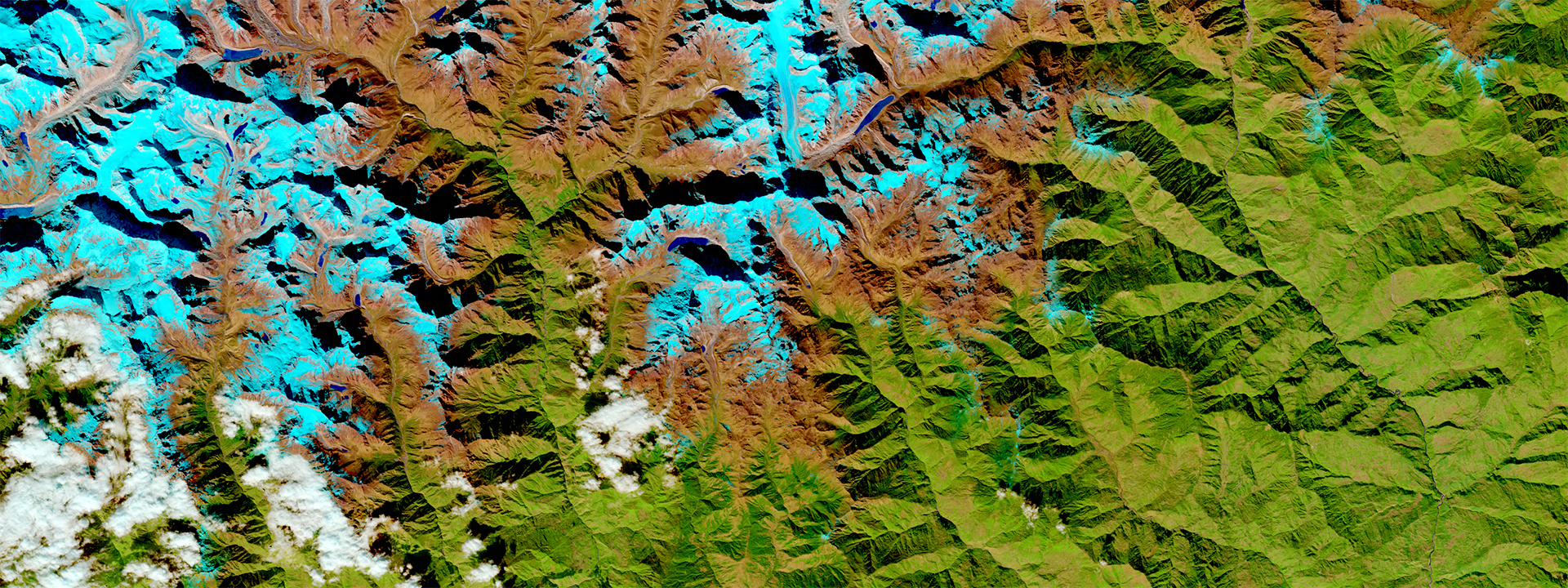
IBM and NASA’s Marshall Space Flight Center have announced a collaboration to use IBM’s artificial intelligence (AI) technology to uncover new insights in NASA’s massive trove of Earth and geospatial science data. For the first time, the collaborative work will apply AI foundation model technology to NASA’s Earth-observing satellite data.

Foundation models are AI models that are trained on a large set of unlabeled data, can be used for various tasks, and can apply knowledge from one situation to another. Over the last five years, these models have rapidly advanced the field of natural language processing (NLP) technology, and IBM is pioneering applications of foundation models beyond language.

Earth observations are being collected at unprecedented rates and volumes, allowing scientists to study and monitor our planet. However, new and innovative approaches are required to extract knowledge from these vast data resources. This work aims to make it easier for researchers to analyse and draw conclusions from large datasets. IBM’s foundation model technology has the potential to accelerate the discovery and analysis of these data, allowing scientists to advance their understanding of the Earth and respond to climate-related issues more quickly.

IBM and NASA intend to create new technologies to extract information from Earth observations. For example, one project will use NASA’s Harmonized Landsat Sentinel-2 (HLS) dataset to train an IBM geospatial intelligence foundation model, a record of land cover and land use changes captured by Earth-orbiting satellites. This foundation model technology will assist researchers in critically analysing our planet’s environmental systems by analysing petabytes of satellite data to identify changes in the geographic footprint of phenomena such as natural disasters, cyclical crop yields, and wildlife habitats.

This collaboration is also expected to produce an easily searchable corpus of Earth science literature. To organise the literature and make it easier to discover new knowledge, IBM created an NLP model trained on nearly 300,000 Earth science journal articles. The fully trained model uses PrimeQA, IBM’s open-source, multilingual question-answering system, and is one of the largest AI workloads trained on Red Hat’s OpenShift software to date. The new language model for Earth science could be incorporated into NASA’s scientific data management and stewardship processes and serve as a resource for researchers.

Other potential IBM-NASA collaborative projects in this agreement include developing a foundation model for weather and climate prediction using MERRA-2, an atmospheric observation dataset. This collaboration is part of NASA’s Open-Source Science Initiative, a decade-long commitment to creating an inclusive, transparent, and collaborative open science community.

“Foundation models have proven successful in natural language processing, and it’s time to expand that to new domains and modalities important for business and society. Applying foundation models to geospatial, event-sequence, time-series, and other non-language factors within Earth science data could make enormously valuable insights and information suddenly available to a much wider group of researchers, businesses, and citizens. Ultimately, it could facilitate a larger number of people working on some of our most pressing climate issues.”

Raghu Ganti, principal researcher at IBM.

“The beauty of foundation models is they can potentially be used for many downstream applications. Building these foundation models cannot be tackled by small teams,” he added. “You need teams across different organizations to bring their different perspectives, resources, and skill sets.” 

 Rahul Ramachandran, senior research scientist at NASA’s Marshall Space Flight Center in Huntsville, Alabama.

Want to have fortnightly ESG Headlines?

You’ve been successfully subscribed to our newsletter!

Source: IBM Press Release
Tags: AIESGESG BROADCASTESG COMPANIESIBMNASASustainability
ShareTweetSend
Vedanshi Singh

Vedanshi Singh

Science communicator passionate about climate change, ESG, and sustainability, blending psychology with communication for impact.

RELATEDCONTENT

India: Jewar Airport’s IGBC Green Campus Signals Shift in Sustainable Aviation Infrastructure

21st January 2026
India: Jewar Airport’s IGBC Green Campus Signals Shift in Sustainable Aviation Infrastructure

India advances sustainable aviation as Jewar Airport becomes the country’s first IGBC-certified green airport campus. 1️⃣ Jewar Airport integrates on-site...

Read moreDetails

India and Local Climate Action: Mumbai Climate Week Launches Gender-Responsive, Community-Led Planning

21st January 2026
India and Local Climate Action: Mumbai Climate Week Launches Gender-Responsive, Community-Led Planning

Mumbai Climate Week sparks a paradigm shift with gender-responsive, community-led climate planning in Raigad, pioneering a new model for local...

Read moreDetails

Switzerland and Global Environmental Agenda: Geneva Updates on Climate, Biodiversity, and Risk Prioritization

21st January 2026
Switzerland and Global Environmental Agenda: Geneva Updates on Climate, Biodiversity, and Risk Prioritization

Global environmental risks remain critical even as non-environmental tensions dominate short-term global risk rankings. 1️⃣ The Global Risks Report 2026...

Read moreDetails
Next Post
Google leveraging AI to improve agriculture sustainability in India

Google leveraging AI to improve agriculture sustainability in India

LATEST BROADCAST

India: Jewar Airport’s IGBC Green Campus Signals Shift in Sustainable Aviation Infrastructure

21st January 2026

India and Local Climate Action: Mumbai Climate Week Launches Gender-Responsive, Community-Led Planning

21st January 2026

Switzerland and Global Environmental Agenda: Geneva Updates on Climate, Biodiversity, and Risk Prioritization

21st January 2026

World Economic Forum: Scaling Blue Foods for Global Sustainability

21st January 2026

Energy Efficiency Gains Global Momentum as Key Climate and Competitiveness Tool

20th January 2026

USGBC: Advancing Global LEED v5 Inclusive Design Frameworks

20th January 2026

Want to have fortnightly ESG Headlines?

You’ve been successfully subscribed to our newsletter!

Check Us At Twitter

Tweets by ESGBROADCAST

Contact Us

Thank you for your interest in ESG BROADCAST. Please complete this form to discuss how we can help your organisation.
Please enable JavaScript in your browser to complete this form.
Name *
Loading
ESG BROADCAST - Latest ESG News, Headlines and Updates

©ESG BROADCAST info@esgbroadcast.com Promoted by JointValues ESG Services

Know More

  • Broadcast Your Story
  • About Us
  • Advisors and Contributors Network
  • Career
  • Publication Policy and Content Guidelines
  • Privacy Policy
  • Contact Us

Follow Us

Welcome Back!

Login to your account below

Forgotten Password?

Retrieve your password

Please enter your username or email address to reset your password.

Log In

Add New Playlist

No Result
View All Result
  • About Us
  • Broadcast Your Story
  • Advisors and Contributors Network
  • Career
ESGB ESGBLogo