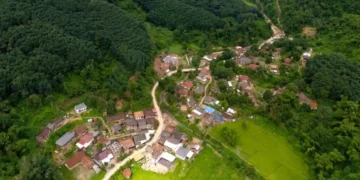


Climate policy update advances environmental governance and disaster resilience in fragile mountain ecosystems. ESG BROADCAST shares key takeaways.
In a landmark climate adaptation move, the Green Climate Fund (GCF) has approved a $36.1 million grant to help Nepal reduce the escalating threat of glacial lake outburst floods (GLOFs), which are intensifying across the Himalayan region due to accelerated glacial melting. The seven-year project will be executed by Nepal’s Department of Hydrology and Meteorology (DHM) in partnership with the United Nations Development Programme (UNDP), targeting over 2.3 million people in vulnerable high-altitude zones.
The initiative—formally titled Enhancing Climate and Disaster Resilience of Nepal’s Mountain Communities through Risk Reduction of Glacial Lake Outburst Floods—focuses on proactive risk prevention. It includes lowering water levels in four critically dangerous glacial lakes (Thulagi, Lower Barun, Lumding Tsho, and Hongu 2), expanding hazard monitoring networks, and upgrading early warning systems to protect lives and infrastructure in the Koshi and Gandaki river basins.
The Himalayan region is heating nearly twice as fast as the global average, and Nepal now faces more than 2,000 glacial lakes—21 of which are deemed potentially dangerous. Without early intervention, GLOFs could devastate downstream communities, disrupt energy supply chains, and damage transport and agricultural infrastructure.
In addition to technical interventions such as vegetative gabion walls and check dams, the programme emphasizes nature-based solutions. More than 150 hectares of riverbanks will be reforested to stabilize soil and mitigate runoff risks. Local governments, hydropower companies, and private tourism operators will co-finance and participate in the project, particularly through investments in hydro-meteorological stations and early warning technologies.
This GCF-backed initiative aligns with Nepal’s National Adaptation Plan (2021–2050) and the third Nationally Determined Contribution (NDC 3.0), embedding long-term climate resilience into national development planning. The project also leverages $14 million in co-financing from the Government of Nepal and institutional partners, bringing total investment to approximately $50 million.
The project’s implementation strategy places strong emphasis on capacity-building. Local governments, disaster response units, and frontline institutions will receive training to manage climate threats more autonomously, while DHM will lead technical oversight and sustainability planning post-project completion.
Senior stakeholders have emphasized the urgency of this effort. “2025 becomes a milestone year for the world’s glaciers… immediate measures are critical for mountain communities’ resilience,” said Henry Gonzalez, Chief Investment Officer at the Green Climate Fund. UNDP Resident Representative Kyoko Yokosuka added, “This is climate action that is both grounded and game changing.”
Strategic significance lies in Nepal’s proactive stance in climate risk governance and its use of blended finance to tackle one of the most complex environmental challenges of the Himalayan region. For ESG-aligned stakeholders, the initiative demonstrates a replicable model of public-private cooperation to secure adaptation financing, while embedding disaster prevention into core development policy.
ESG BROADCAST will continue monitoring the updates related to this topic. Stay tuned to be updated on the related policy and pivotal regulatory shift.