
Public-private alliance expands financial inclusion and strengthens responsible business and corporate sustainability. ESG BROADCAST shares key takeaways.
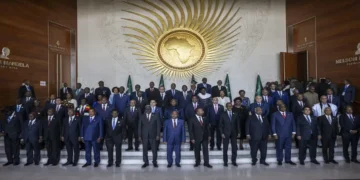
The World Bank Group has officially joined the African Development Bank Group (AfDB) and Mastercard as a co-chair of the Mobilizing Access to the Digital Economy (MADE) Alliance in Africa. This strategic partnership, announced in August 2025, underscores a growing global effort to unlock inclusive digital economies across the African continent, particularly for underserved populations.
The MADE Alliance Africa is a public-private partnership aimed at accelerating digital and financial inclusion by connecting individuals and micro, small, and medium-sized enterprises (MSMEs) to essential services such as digital payment systems, identification platforms, and e-commerce infrastructure. With the World Bank Group’s entry as co-chair, the Alliance seeks to expand its operational reach and impact, aligning with broader development goals on access, inclusion, and poverty alleviation.
The Alliance’s founding objective is to bring 100 million individuals and businesses into the digital economy by 2030. It operates by fostering collaborations between governments, financial institutions, technology providers, and development organisations, creating a robust ecosystem to scale up digital services and connectivity.
The World Bank’s involvement marks a significant step in mainstreaming digital inclusion within global development finance agendas. Leveraging its technical expertise, policy influence, and financing capabilities, the World Bank will support member countries in integrating digital infrastructure with regulatory and social systems. This collaboration builds on the institution’s broader agenda to increase access to financial services, digital IDs, and mobile connectivity—essential levers for sustainable economic growth and social equity.
MADE Alliance Africa is structured around four key pillars: digital infrastructure, digital identification, financial services, and MSME digitalisation. The World Bank Group, through its International Development Association (IDA) and International Finance Corporation (IFC), will contribute to these areas by supporting governments in regulatory reforms, investing in enabling infrastructure, and mobilising capital for inclusive fintech solutions.
“We are committed to unlocking the full potential of Africa’s digital economy through impactful partnerships,” said senior representatives from the World Bank, AfDB, and Mastercard in a joint statement. The move is also seen as a response to Africa’s fast-growing youth population, urbanisation trends, and the continent’s accelerating mobile phone adoption—factors that present both opportunities and challenges for digital transformation.
Strategic significance lies in embedding digital access as a foundational ESG metric for both public policy and private investment strategies. For sustainability officers and investors, the MADE Alliance offers a concrete framework for linking digital equity with financial empowerment, thereby advancing responsible business and development outcomes across Africa.
ESG BROADCAST will continue monitoring the updates related to this topic. Stay tuned to be updated on the related policy and pivotal regulatory shift.