Energy transition and sustainable growth serve as the twin pillars of India’s development, and ESG BROADCAST shares key takeaways.
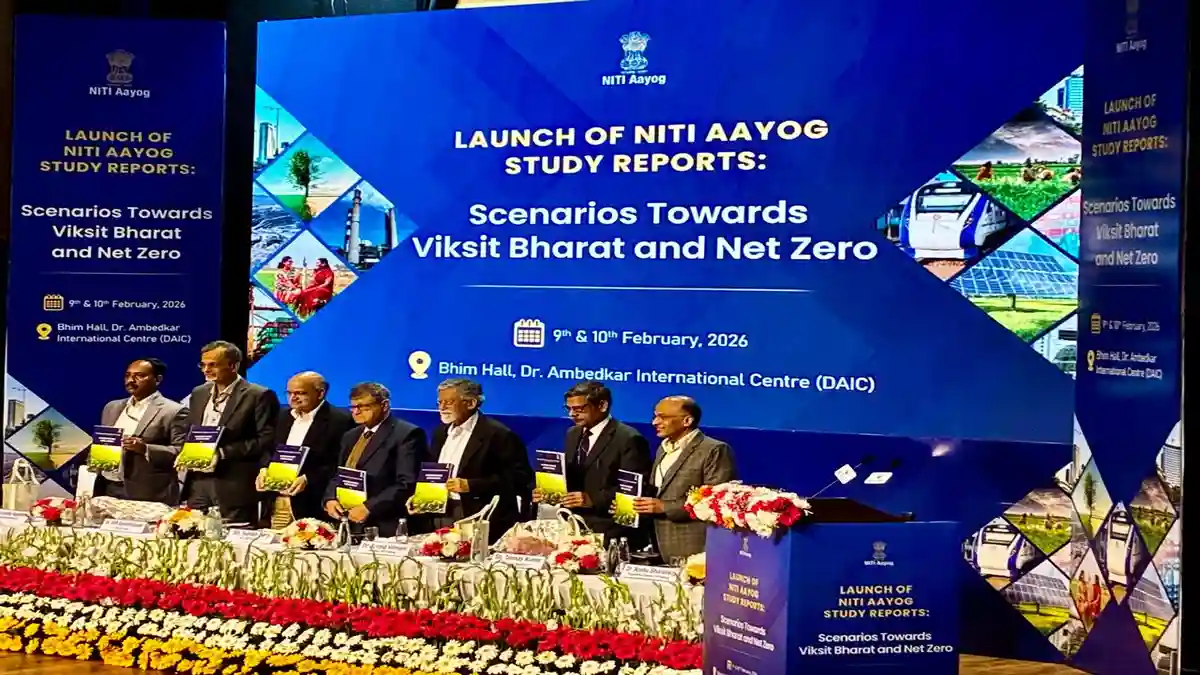
February 9, 2026, NITI Aayog has commenced a two-day event at the Dr. Ambedkar International Centre to launch study reports titled “Scenarios Towards Viksit Bharat and Net Zero.” These reports serve as a foundational roadmap for India to achieve its dual ambitions of becoming a developed nation by 2047 and reaching net-zero emissions by 2070. The first day of the launch focused on providing an overview of the scenarios while addressing the macroeconomic implications and the financing needs required to fuel this green transformation.
The sessions on February 9, 2026, highlighted the balance between maintaining economic growth and accelerating the green transition. Experts and policymakers discussed the necessity of aligning industrial expansion with sustainable energy practices to ensure that the vision of Viksit Bharat remains environmentally viable. The reports outline that achieving these goals will require a mobilization of capital and a shift in fiscal priorities to support the infrastructure and technology necessary for a low-carbon economy.
The reports analyze the specific needs and challenges within the power, industry, and transport sectors, identifying them as the primary drivers of future emission trends. A dedicated assessment of minerals was presented to address the supply chain security for materials required in renewable energy and electric vehicle manufacturing, ensuring that India’s path to net zero is not hindered by resource scarcity.
The final segments of the NITI Aayog study reports delve into the social implications of the transition, focusing on buildings, agriculture, and waste management. These reports emphasize that the shift toward net zero must be inclusive, considering the impact on various livelihoods and ensuring that the benefits of a green economy are distributed across society. By addressing the social and sectoral challenges simultaneously, the government aims to create a framework that supports long-term resilience and development throughout the country.
Significance lies in the creation of a clear, actionable framework that aligns national economic development with global climate commitments. By providing detailed sectoral roadmaps and addressing the financing gap, NITI Aayog is giving the private sector and international investors the confidence needed to commit to India’s green future. This initiative ensures that compliance and business strategies are integrated, paving the way for a market-led transition that fulfills India’s pledge to reach net-zero emissions while securing its status as a developed economy.