• Broadcast Your Story I
  • About Us I
  • Advisors and Contributors Network I
  • Check Us At
Saturday, January 17, 2026
No Result
View All Result
ESG BROADCAST
  • ESG BROADCAST
  • ESG MOVERS
  • ESG FINANCE
  • ESG STANDARDS
  • ESG EVENTS
  • ESG REGULATIONS
  • ESG BROADCAST
  • ESG MOVERS
  • ESG FINANCE
  • ESG STANDARDS
  • ESG EVENTS
  • ESG REGULATIONS
ESG BROADCAST
  • LINKEDIN
  • ESG BROADCAST
  • ESG MOVERS
  • ESG FINANCE
  • ESG STANDARDS
  • ESG REGULATIONS

UNFCCC Endorses Full Operationalization of Paris Agreement Crediting Mechanism After COP29

Deepak Singh Baghel (Science and Regulatory Contributor)byDeepak Singh Baghel (Science and Regulatory Contributor)
15th May 2025
in ESG BROADCAST
Reading Time: 3 mins read
A A
UNFCCC Endorses Full Operationalization of Paris Agreement Crediting Mechanism After COP29
Share on LinkedInShare on Twitter

Regulatory Extract:

New rules governing international carbon markets under Article 6.4 enable project-level crediting and transfer of emission reductions. ESG compliance and climate policy update priorities converge. ESG BROADCAST shares key takeaways.

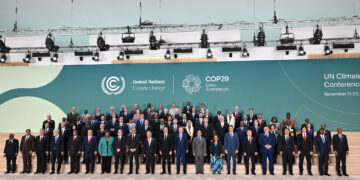
Following landmark decisions at COP29 in Baku in November 2024, the United Nations Framework Convention on Climate Change (UNFCCC) has formally operationalized the Paris Agreement Crediting Mechanism (PACM) under Article 6.4. This regulatory milestone finalizes the rules for international carbon markets and provides countries and project developers a fully functioning mechanism to generate and transfer carbon credits known as Article 6.4 Emission Reductions (A6.4ERs).

The PACM’s operational readiness culminates a multi-year, dual-track process: COP26 in Glasgow established the foundational “Rules, Modalities, and Procedures” (RMPs), including the supervisory governance structure and registry provisions; subsequent work by the Article 6.4 Supervisory Body (SBM), established in 2022, addressed complex regulatory details such as removals methodologies and project standards. At COP29, the Conference of the Parties serving as the meeting of the Parties to the Paris Agreement (CMA) endorsed the SBM’s standards on methodologies and removals, making them legally binding and resolving longstanding deadlocks that stalled progress at COP27 and COP28.

Key regulatory provisions clarified in Baku include enhanced procedures for host country authorization of Mitigation Contribution Units (MCUs), including retroactive approval, and a broader scope of eligible activities transitioning from the Clean Development Mechanism (CDM), now encompassing afforestation and reforestation (A/R) projects. Transitioning CDM projects must align with Article 6.4 standards and meet the December 2025 application deadline. The first transitioned project, a cookstoves programme in Myanmar, has already been approved.

New PACM projects must adhere to updated validation, verification, and prior consideration notification requirements under activity cycle standards. Validation and verification are to be conducted by Designated Operational Entities (DOEs), with documentation submitted through the mechanism’s digital infrastructure. The PACM registry, central to the tracking and issuance of A6.4ERs and MCUs, is in advanced stages of development, with interim functionalities enabling early issuances. As of early 2025, 1,478 CDM activities have undergone stakeholder consultation and are pending full transition, with six host countries already providing approval.

Additionally, the SBM’s Methodological Expert Panel (MEP) continues to refine procedures, with critical elements such as sampling standards and further guidance on removals expected by August 2025. These developments are essential for maintaining environmental integrity and ensuring the fungibility of credits across jurisdictions and compliance markets.

Strategic significance lies in the mechanism’s role in unlocking international cooperation and private sector investment under net-zero targets. The operational PACM provides certainty and structure for cross-border carbon crediting, which supports nationally determined contributions (NDCs) while incentivizing high-integrity mitigation outcomes. ESG stakeholders—particularly sustainability officers, carbon market participants, and compliance officers—must monitor host country policies, registry developments, and forthcoming SBM guidance to align with this evolving regulatory landscape.

ESG BROADCAST will continue monitoring the updates related to this topic. Stay tuned to be updated on the related policy and pivotal regulatory shift.

Want to have fortnightly ESG Headlines?

You’ve been successfully subscribed to our newsletter!

Tags: COP29
ShareTweetSend
Deepak Singh Baghel (Science and Regulatory Contributor)

Deepak Singh Baghel (Science and Regulatory Contributor)

Deepak Singh Baghel holds a PhD in Environmental Engineering from AcSIR, along with experience as a faculty member in Civil & Environmental Engineering and as an ESG consultant. At ESG BROADCAST, he contributes to the "Science Extract" and "Regulatory Updates" column, making complex climate science research accessible and actionable for a broad audience.

RELATEDCONTENT

EU and China Reaffirm Climate Commitments in Joint Statement Ahead of COP30

30th July 2025
EU and China Reaffirm Climate Commitments in Joint Statement Ahead of COP30

World’s top emitters pledge to update climate targets as part of renewed global momentum. ESG BROADCAST shares key takeaways. In...

Read moreDetails

From Finance to Fossil Fuels: The Wins and Gaps of COP29

6th December 2024
COP29 achieves full operationalisation of Article 6 of Paris Agreement – Unlocks International Carbon Markets

The COP29 conference, held this year in Baku, Azerbaijan, extended beyond its scheduled Friday deadline, concluding over the weekend with...

Read moreDetails

COP29 achieves full operationalisation of Article 6 of Paris Agreement – Unlocks International Carbon Markets

3rd December 2024
COP29 achieves full operationalisation of Article 6 of Paris Agreement – Unlocks International Carbon Markets

The COP29 Presidency announced the conclusion of a decade-long negotiation on high-integrity carbon markets under Article 6 of the Paris...

Read moreDetails
Next Post
EU lawmakers agreed on new rules on corporate due diligence to safeguard human rights and environment

EU Revises CBAM to Ease SME Compliance While Retaining 99% Emissions Oversight

LATEST BROADCAST

World Economic Forum: Geoeconomic Confrontation Tops Global Risks Report 2026

16th January 2026

Nigeria: Launching the National Carbon Market Framework

16th January 2026

Cabo Verde: World Bank Expands Energy Transition Support

15th January 2026

China: Official Launch of Corporate Sustainability Disclosure Standard

13th January 2026

World Bank Carbon Pricing 2025: Reviewing the Shift from Experiment to Economic Governance

13th January 2026

EU: Simplification of Taxonomy Reporting via Regulation (EU) 2026/73

13th January 2026

Want to have fortnightly ESG Headlines?

You’ve been successfully subscribed to our newsletter!

Check Us At Twitter

Tweets by ESGBROADCAST

Contact Us

Thank you for your interest in ESG BROADCAST. Please complete this form to discuss how we can help your organisation.
Please enable JavaScript in your browser to complete this form.
Name *
Loading
ESG BROADCAST - Latest ESG News, Headlines and Updates

©ESG BROADCAST info@esgbroadcast.com Promoted by JointValues ESG Services

Know More

  • Broadcast Your Story
  • About Us
  • Advisors and Contributors Network
  • Career
  • Publication Policy and Content Guidelines
  • Privacy Policy
  • Contact Us

Follow Us

Welcome Back!

Login to your account below

Forgotten Password?

Retrieve your password

Please enter your username or email address to reset your password.

Log In

Add New Playlist

No Result
View All Result
  • About Us
  • Broadcast Your Story
  • Advisors and Contributors Network
  • Career
ESGB ESGBLogo